
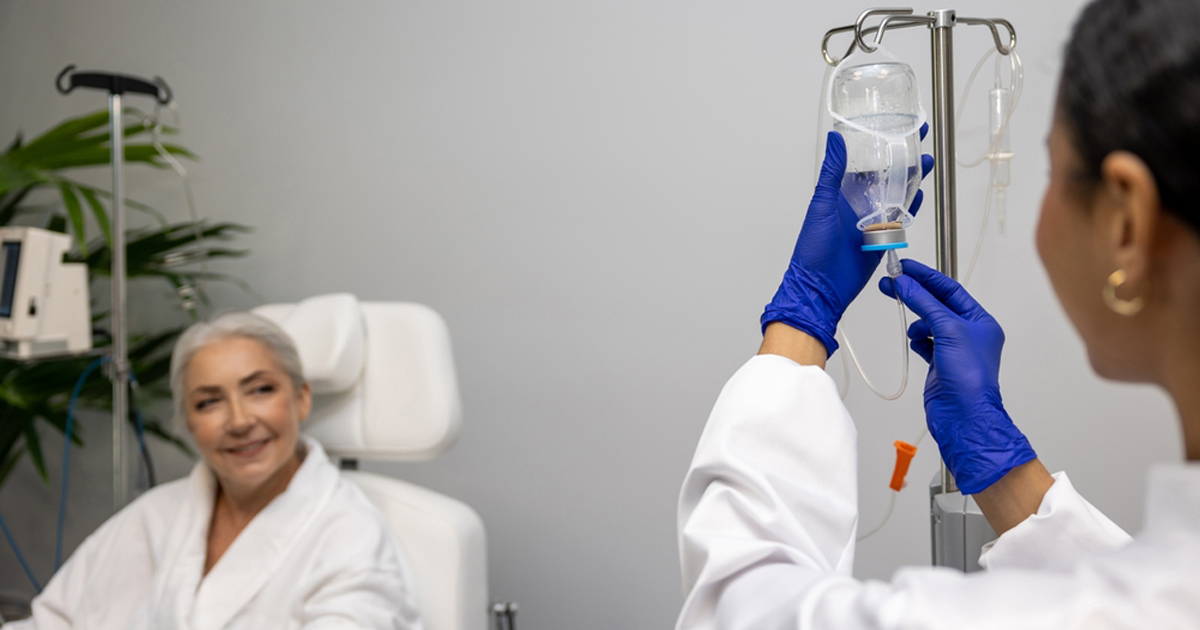
What Should You Do Before and After an IV Therapy Session?
Table of Contents
- 1. What Happens During an IV Therapy Session?
- 2. IV Therapy Before and After: How Should You Prepare?
- 3. What Should You Eat and Drink Before Your Appointment?
- 4. What Should You Tell Your Provider Before an IV Infusion?
- 5. What Can You Expect During Your IV Therapy Session?
- 6. What Should You Do Immediately After IV Therapy?
- 7. Can You Exercise or Return to Normal Activities Afterward?
- 8. What Reactions Should You Pay Attention to After an IV?
- 9. FAQ
- 10. Key Takeaways
- 11. Feel More Prepared for Your Next IV Therapy Experience
- 12. Disclaimer
- 13. References
If you are planning your first infusion, you may be wondering what you should do before you arrive and what happens once your appointment is over. IV Therapy Before and After preparation does not need to be complicated, but a little planning can make the experience easier to understand.
Your health history, hydration status, medications, daily routine, and reasons for considering treatment can all affect the conversation you have with your provider. Because recommendations can vary from person to person, understanding how your IV plan can be personalized around your individual needs can provide useful context before your visit.
Here is what you need to know about preparing for an IV therapy session, what to expect while you are there, and how to approach the hours afterward.
1. What Happens During an IV Therapy Session?
IV therapy involves placing a small intravenous catheter into a vein so fluids or other prescribed substances can be administered directly into the bloodstream. What is included in an infusion can vary depending on the purpose of treatment, your health information, and the provider’s recommendation.
Before anything begins, you may have an opportunity to discuss why you are considering treatment. Your provider may review relevant medical information, medications, supplements, allergies, previous reactions, and other factors that could affect whether a particular infusion is appropriate for you.
Once the IV is placed, the infusion is administered over a period of time. The length of your IV appointment can vary depending on the type of treatment, amount of fluid, ingredients used, and how the infusion is administered.
You may be able to relax, read, use your phone, or simply sit quietly during the session. If you notice discomfort or feel different while the infusion is running, tell the healthcare professional monitoring you rather than assuming you need to wait until the session is finished.
The main point is that an IV treatment should be treated as a healthcare experience, not simply as something you need to “get through.” Asking questions and communicating how you feel are important parts of the process.
2. IV Therapy Before and After: How Should You Prepare?
Good IV therapy preparation starts with knowing what your provider expects from you. Instructions can differ depending on the type of infusion and your individual circumstances, so provider-specific directions should take priority over general online advice.
Unless you have been given different medical instructions, think about your normal routine before the appointment. Consider whether you have eaten, had your usual fluids, taken your regular medications as directed, and gathered any health information your provider has requested.
Avoid making major changes to your medications or supplements simply because you have an IV appointment coming up. If you are unsure whether something should be taken before treatment, ask the healthcare professional managing your care.
Comfort matters too. Clothing that makes your arm easy to access can make placement of the IV more convenient. You may also want to plan enough time for the appointment so you are not rushing to another commitment immediately afterward.
Preparation is less about following a universal checklist and more about arriving ready to communicate clearly about your health and treatment goals.
3. What Should You Eat and Drink Before Your Appointment?
You might assume that drinking as much water as possible before an infusion is always better. That is not necessarily the right approach for everyone. Fluid needs vary, and certain medical conditions can require individualized guidance about fluid intake.
In general, maintaining your usual appropriate hydration is more sensible than suddenly consuming a very large amount of water shortly before your appointment. Mayo Clinic explains that dehydration occurs when the body loses more fluid than it takes in and discusses common causes and signs of inadequate fluid balance.
Food is another area where your provider’s instructions matter. Unless you have specifically been told to fast, arriving after skipping meals unnecessarily may leave you feeling uncomfortable or distracted during your appointment.
If you have diabetes, kidney disease, heart disease, fluid restrictions, dietary restrictions, or another condition that affects what you should eat or drink, follow your healthcare provider’s guidance instead of generic preparation advice.
Your goal is not to dramatically change your routine before an infusion. It is to arrive appropriately prepared according to your individual health needs.
4. What Should You Tell Your Provider Before an IV Infusion?
A provider needs accurate information to determine whether an IV infusion is appropriate and how it should be approached. Even details that seem unrelated to you may matter clinically.
Be prepared to discuss your current medications and supplements, allergies, relevant medical conditions, previous IV experiences, and any reactions you have experienced with medications or infusions.
It is also important to mention if you are currently feeling unwell or if something about your health has changed since you arranged the appointment. Do not assume that because an infusion was previously appropriate, the same recommendation automatically applies when your health circumstances change.
Your reasons for considering treatment matter as well. For example, someone seeking hydration after significant fluid loss may have different considerations from someone exploring a nutrient infusion as part of a broader wellness routine.
The more accurate the information you provide, the easier it is for your healthcare professional to have a meaningful discussion with you about potential options, limitations, and precautions.
5. What Can You Expect During Your IV Therapy Session?
Once your provider has reviewed the necessary information and treatment is ready to begin, a healthcare professional will typically place a catheter into a vein, commonly in the arm or hand. The catheter provides access for the prescribed intravenous fluids or other treatment.
Cleveland Clinic explains that IV fluids are delivered directly into a vein and that healthcare providers determine factors such as the type and amount of fluid according to the patient’s needs. The resource also discusses potential complications associated with IV administration.
You may feel a brief pinch when the IV is inserted. After placement, you should communicate if you develop increasing pain, burning, swelling, leaking, or another unexpected sensation around the IV site.
Your provider may also check on how you are feeling while treatment is underway. This is a good time to ask questions if you are uncertain about something.
If you are still learning how treatment is typically approached, you can also read more about what an individualized IV therapy experience may involve without assuming that every appointment or treatment plan will be identical.
6. What Should You Do Immediately After IV Therapy?
Once the infusion is complete, the IV catheter is removed and the insertion site is usually covered. Follow any instructions you receive about how long to keep the covering in place or what to do if minor bleeding occurs.
Before leaving, pay attention to how you feel. If you feel dizzy, lightheaded, nauseated, unusually weak, or otherwise unwell, tell your healthcare professional rather than simply leaving and hoping the feeling passes.
After your appointment, follow any treatment-specific instructions your provider gives you. Different IV treatments may involve different considerations, so there is no single aftercare routine that applies to every infusion.
You can generally think of IV therapy aftercare as a continuation of the same principle you followed before treatment: avoid making assumptions. Follow individualized instructions, maintain an appropriate normal routine, and pay attention to changes in how you feel.
You also do not need to judge the success of an infusion based on an immediate sensation. How you feel afterward can be influenced by many things, including sleep, food intake, hydration status, activity, underlying health conditions, and the reason you received treatment.
7. Can You Exercise or Return to Normal Activities Afterward?
Whether you can return immediately to exercise or other activities depends on the treatment you received, how you feel afterward, and any instructions provided by your healthcare professional.
If you feel well and have not been given activity restrictions, your provider may tell you that normal activities are reasonable. However, this should not be treated as a universal rule for every type of infusion or every person.
If you were already dehydrated, exhausted, recovering from intense exercise, or feeling unwell before treatment, jumping straight into another strenuous workout may not make sense. Pay attention to your body and follow individualized medical guidance.
For people who are physically active, learning more about how hydration support may fit around exercise and recovery can provide additional context about the relationship between activity, fluid balance, and recovery.
Your activity level is only one part of the picture. Sleep, nutrition, hydration, training intensity, and recovery time all contribute to how you feel after exercise.
An IV infusion should not be viewed as a substitute for appropriate recovery habits.
8. What Reactions Should You Pay Attention to After an IV?
A small amount of tenderness or minor bruising can sometimes occur around a needle or catheter insertion site. What matters is paying attention to whether symptoms are mild and improving or becoming more noticeable.
Contact an appropriate healthcare professional if you have concerns about increasing pain, redness, swelling, warmth, drainage, or another unexpected change around the IV site. You should also seek appropriate medical attention for significant or rapidly worsening symptoms, especially if they involve difficulty breathing, chest pain, severe dizziness, fainting, or signs of a serious allergic reaction.
Do not use a blog or online symptom list to decide whether a potentially serious reaction can safely be ignored.
It is also worth separating expected treatment experiences from claims you may see online. Feeling energized, refreshed, or different after an infusion is subjective and does not prove that a specific medical benefit has occurred.
If something feels unusual to you, asking a qualified healthcare professional is more useful than comparing your experience with someone else’s.
9. FAQ
How far in advance should you prepare for an IV therapy appointment?
You usually do not need an elaborate preparation routine for a standard wellness appointment unless your provider gives you specific instructions. It can be helpful to think about your hydration, meals, medications, health changes, and questions ahead of time.
If your treatment has special requirements, follow the instructions from the healthcare professional overseeing it. Those directions are more important than general advice you find online.
Should you drink water before an IV therapy session?
Maintaining appropriate hydration may be reasonable for many people, but your individual fluid needs depend on your health and circumstances. More water is not automatically better.
People with kidney, heart, or other conditions that affect fluid balance may need specific recommendations. If you have been given fluid restrictions or other instructions, follow those rather than increasing your intake on your own.
Can you eat before an IV infusion?
Whether you should eat beforehand depends on the treatment and any instructions you have received. You should not assume that fasting is necessary unless your provider has specifically told you to fast.
If you are unsure, ask before the appointment. This is especially important if you have a condition that affects blood sugar, take medications that need to be taken with food, or have other dietary considerations.
How long does an IV therapy session usually take?
There is no single treatment time that applies to every IV appointment. The length of a session can depend on the type of infusion, the volume administered, the ingredients involved, the prescribed infusion rate, and your individual treatment plan.
Your provider can give you a more useful estimate once the specific treatment has been selected.
How should you feel after an IV therapy session?
There is no universal feeling you should expect. Your experience can depend on why you received treatment, what was administered, your health status, and many other factors.
Rather than expecting a dramatic or immediate result, follow your provider’s instructions and pay attention to how you actually feel. If you develop symptoms that concern you, seek appropriate medical guidance.
Key Takeaways
- Prepare by following your provider’s instructions rather than relying on a universal online routine.
- Maintain appropriate hydration based on your individual needs instead of suddenly drinking excessive amounts of water.
- Tell your provider about medications, supplements, allergies, medical conditions, previous reactions, and recent health changes.
- Speak up if you experience pain, swelling, burning, dizziness, or another unexpected symptom during treatment.
- Follow treatment-specific aftercare instructions once your infusion is finished.
- Do not assume an IV infusion replaces normal hydration, nutrition, sleep, exercise recovery, or ongoing medical care.
- Seek appropriate medical attention if you experience serious or rapidly worsening symptoms.
Feel More Prepared for Your Next IV Therapy Experience
Knowing what to expect can make an IV appointment feel more straightforward. Preparation begins with understanding your health needs, following any instructions you receive, and being ready to discuss medications, supplements, allergies, symptoms, and treatment goals.
Afterward, the same thoughtful approach matters. Follow your provider’s guidance, return to your normal routine when appropriate, and pay attention to how you feel rather than expecting your experience to match someone else’s.
If you have questions about the types of infusions that may be available and how they are approached, you can explore IV hydration and injections to learn more about treatment options.
Disclaimer
This article is intended for educational and informational purposes only. It should not be considered medical advice, diagnosis, or a recommendation for a specific treatment.
IV therapy may not be appropriate for everyone. The type of infusion, ingredients, fluid volume, infusion rate, preparation, aftercare, potential benefits, and risks can vary based on your health history, medications, allergies, current symptoms, medical conditions, and other clinical considerations.
Always discuss your individual circumstances with a qualified healthcare provider before starting or changing an IV treatment. Seek appropriate medical care if you experience severe, rapidly worsening, or otherwise concerning symptoms.